An invoice is a professional document that tells a customer what products or services were provided, how much they cost, and when payment is due. Whether you're a freelancer, small business owner, or large company, invoices are one of the most important documents in day-to-day business operations.
Invoices do much more than request payment. They create a clear record of a transaction, help businesses manage cash flow, support accounting and tax reporting, and provide legal evidence that work has been completed. A well-written invoice reduces misunderstandings, speeds up payments, and makes your business appear more professional.
What is an invoice?
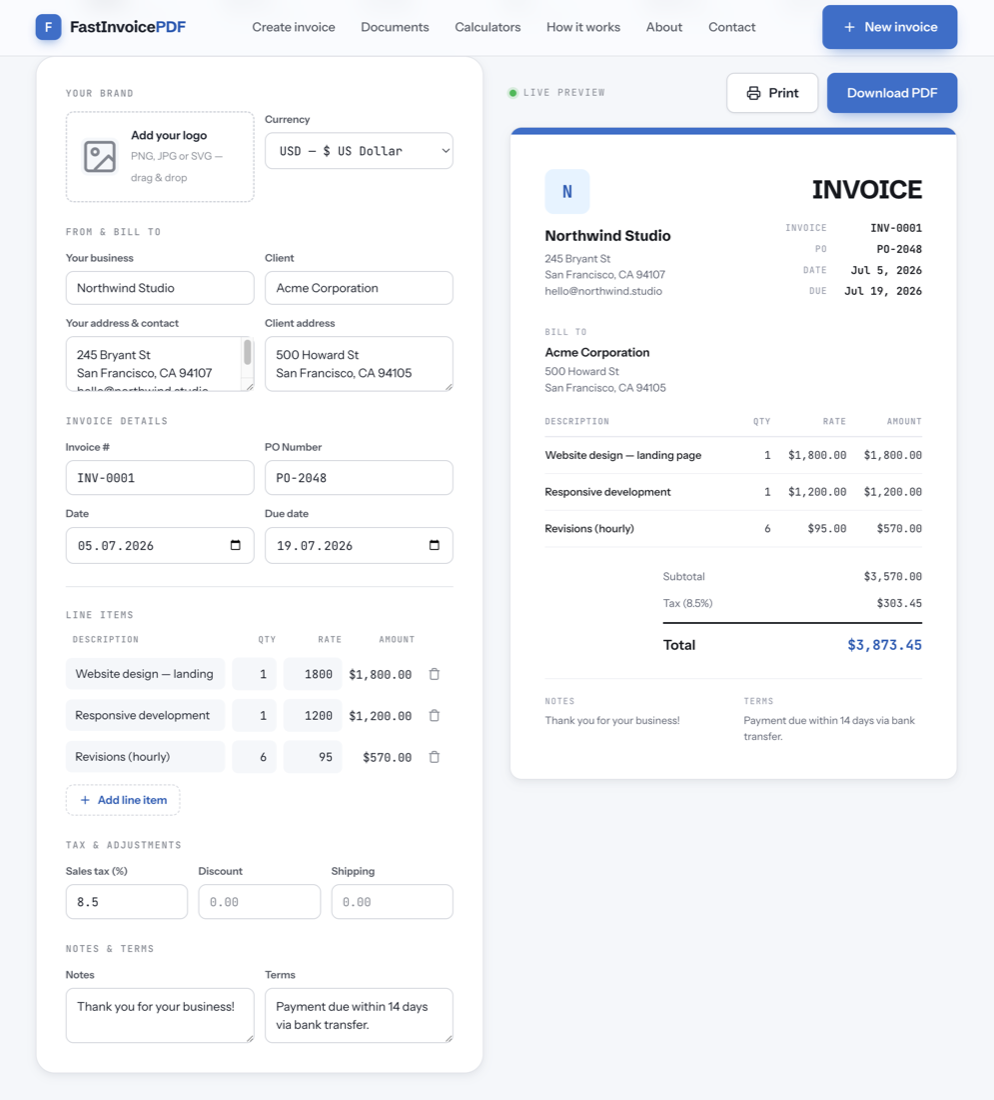
An invoice is a formal request for payment issued by a seller to a buyer after providing goods or services. It lists what was sold, the agreed price, applicable taxes, payment terms, and the total amount owed.
Unlike a quote or estimate, an invoice is sent after the work has been completed or the products have been delivered. It informs the customer that payment is now expected according to the agreed terms.
An invoice is more than a bill — it's an official business record that documents a completed transaction.
Why are invoices important?
Invoices play a critical role in every business, regardless of size. They provide clarity for both the seller and the customer while creating an organized financial history.
- Request payment in a professional manner.
- Create a permanent record of every sale.
- Help businesses track income and outstanding balances.
- Support bookkeeping and accounting.
- Provide documentation for tax purposes.
- Reduce payment disputes by clearly describing the work performed.
Businesses that consistently use clear, professional invoices often receive payments faster because clients know exactly what they're paying for and when payment is expected.
What should an invoice include?
Although invoice requirements vary by country, most professional invoices contain the same essential information.
- Invoice number
- Invoice date
- Due date
- Seller's business information
- Customer's information
- Description of products or services
- Quantity and unit price
- Subtotal
- Applicable taxes (VAT or sales tax)
- Total amount due
- Payment instructions
The more complete and organized an invoice is, the less likely a client will need to ask questions before making payment.
How does an invoice work?
The invoicing process is simple but essential to maintaining healthy business finances.
- Provide goods or complete the agreed service.
- Create an invoice with all required information.
- Send the invoice to the customer.
- The customer reviews the invoice.
- The customer submits payment.
- The invoice is marked as paid and stored for accounting records.
Many businesses also send payment reminders before or after the due date if an invoice remains unpaid.
Different types of invoices
Businesses use different types of invoices depending on the situation.
Standard Invoice
The most common invoice used after goods or services have been delivered.
Proforma Invoice
A preliminary invoice sent before work begins. It outlines expected costs but is not a request for payment.
Recurring Invoice
Used for subscription services, retainers, memberships, and ongoing monthly work.
Credit Note
Issued when part of an invoice needs to be refunded or corrected.
Commercial Invoice
Required for many international shipments to describe the value of exported goods.
Invoice vs receipt
Invoices and receipts are often confused, but they serve different purposes.
| Invoice | Receipt |
|---|---|
| Requests payment | Confirms payment was received |
| Sent before payment | Issued after payment |
| Shows amount due | Shows amount paid |
| May still be outstanding | Completes the transaction |
Invoice vs quote
A quote estimates how much work will cost before a customer agrees to move forward. An invoice is created after the work has been completed and officially requests payment.
Common invoicing mistakes
Small mistakes can delay payment significantly.
- Missing invoice numbers.
- No payment due date.
- Incorrect customer information.
- Vague descriptions like "Consulting."
- Incorrect tax calculations.
- Missing payment instructions.
- Mathematical errors.
Reviewing every invoice before sending it helps avoid unnecessary payment delays.
How digital invoices improve business
Modern businesses increasingly use digital invoices instead of paper documents. PDF invoices are easier to create, send, archive, and search. They also look more professional and reduce administrative work.
Many companies now generate invoices online, allowing them to customize branding, calculate taxes automatically, and download clean PDF documents in seconds.
Frequently Asked Questions
Is an invoice legally required?
In many countries, businesses are legally required to issue invoices for certain transactions, especially when taxes such as VAT or sales tax apply. Requirements vary depending on local regulations.
Can an invoice be edited after it has been sent?
If a mistake is discovered, businesses usually issue a corrected invoice or a credit note rather than editing the original document.
How long should invoices be kept?
Most countries require businesses to keep invoices for several years for accounting and tax purposes. Always follow your local regulations.
Can freelancers use invoices?
Absolutely. Freelancers, consultants, agencies, contractors, and small businesses all use invoices to request payment from clients.
A professional invoice helps you get paid faster, maintain accurate financial records, and build trust with your clients. Whether you're invoicing for freelance work, consulting services, or products, a clear and well-designed invoice makes every transaction smoother.
Create your next invoice in less than a minute using our Free Invoice Generator. Simply enter your business details, add your products or services, and download a professional PDF ready to send.